

Outdoor kitchen installation is the fastest way to upgrade your backyard for entertaining and boost your home’s value—if you know what to look for and avoid unexpected costs. As the market soars, it pays to shop smart, compare regional prices, and demand a clear, itemized quote.
Key Takeaways
- Outdoor kitchen installation costs and timelines vary widely—always demand an itemized proposal with regional specifics.
- North America leads in backyard kitchen designs, but prefab options are speeding up installs and cutting waste everywhere.
- Durability, warranty, and maintenance obligations often matter more than flashy appliances; know what holds value long term.
- Market snapshot — 2024 size, growth, and what it means for buyers
- Regional breakdown — where demand and products concentrate
- Key trends shaping outdoor kitchen installation in 2024
- The rise of prefabricated & modular systems — a buyer’s advantage
- Essential appliances & features buyers must prioritize
- Durable materials and layouts that maximize longevity and resale
- Common homeowner pain points & installation complaints
- Itemized mid-range outdoor kitchen cost
- Permits, building codes, and typical timelines
- Which appliances & features offer best durability, function, and value
- Top 3 content gaps competitors are missing
- Conversion-focused closing — how to turn intent into leads
- Sources to add and primary research required
- FAQs on Outdoor Kitchen Installation
Market snapshot — 2024 size, growth, and what it means for buyers
The outdoor kitchen installation market has exploded in recent years. In 2024, it is valued between $23.66 and $24.6 billion [source] and is projected to more than double within a decade, hitting as much as $60.2 billion by 2033–2034, with a compound annual growth rate near 9.2% [source]. For buyers, this means more choice, more innovation, and more competition among contractors and manufacturers—leading to better value if you’re ready to invest now. Scaling up has also forced more brands to reveal cost structures and install processes, giving homeowners a stronger position to negotiate and compare offers.
Regional breakdown — where demand and products concentrate
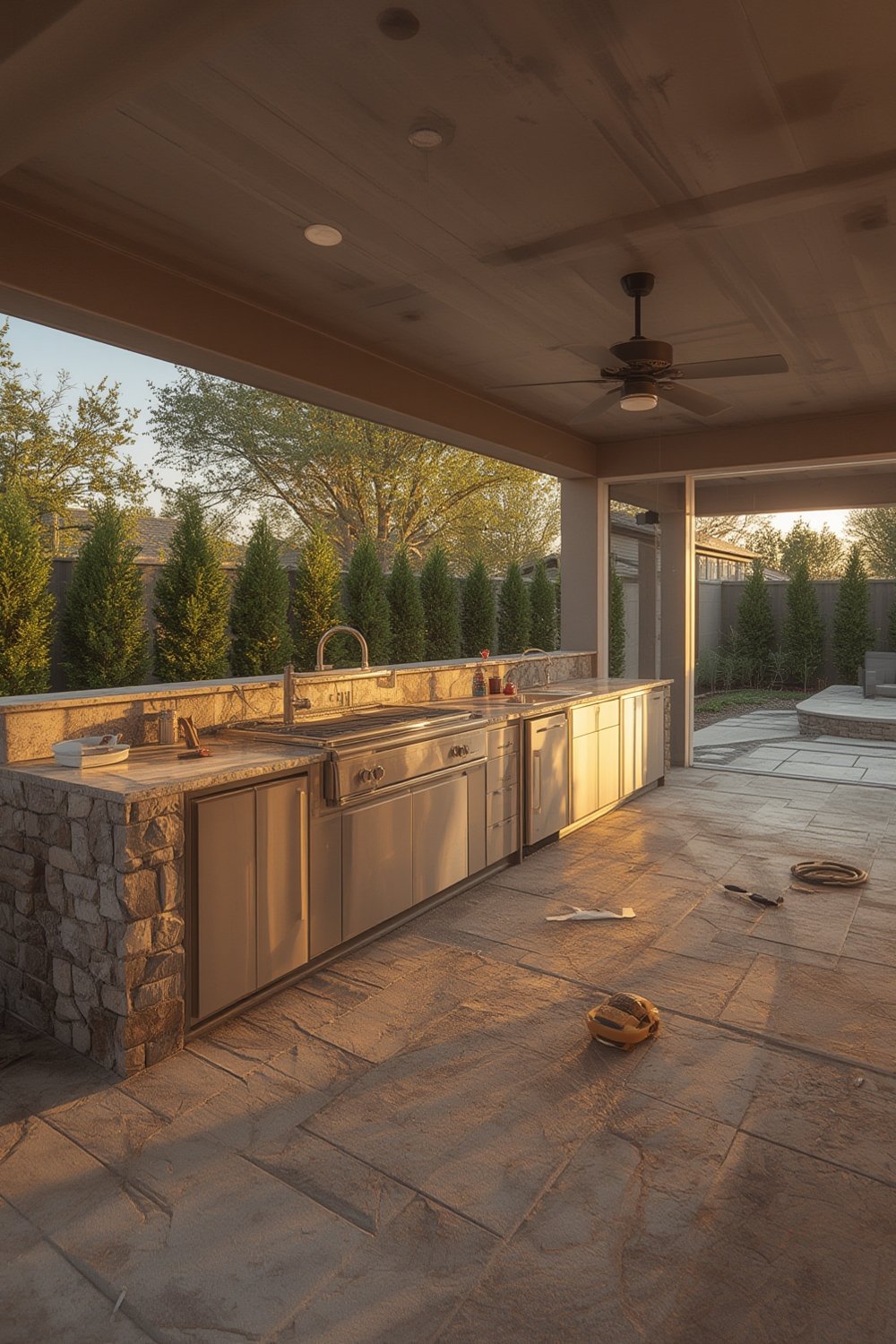
North America dominates the backyard kitchen designs market, representing about 46% of worldwide installations (roughly $11.3 billion in 2024) [source]. Not only does this drive more competitive pricing, but it also ensures the widest selection of outdoor kitchen cabinets, appliance bundles, and finishes for U.S. and Canadian buyers. In this region, expect easier access to prefab lines and reliable contractors. In contrast, European and Asia-Pacific markets are growing quickly, but product choices, installation labor, and pricing models can vary—and warranties may differ.
- North America: 40% of outdoor kitchen cabinets market revenue (about $1.18 billion), with strong distribution and fast prefab options.
- Europe: About 30%, with high-end product focus and innovation in compact layouts.
- Asia-Pacific: Fastest growth, often in urban rooftop or terrace projects.
For Americans, this also means finding a qualified contractor for outdoor kitchen installation is typically easier, with more choices and references available locally.
Key trends shaping outdoor kitchen installation in 2024
Several trends are making outdoor cooking stations more desirable and attainable. First, people are spending more time outdoors and want to entertain at home—a driver seen across all income levels. Second, material innovation is making weatherproof setups realistic even in harsher climates. Aluminum and coated stainless steel cabinet systems—previously reserved for commercial sites—are now common in residential projects. Finally, kitchen appliance manufacturers now partner directly with cabinet suppliers to package outdoor kitchen appliances into easy-to-select bundles. This helps cut costs, speed up projects, and reduce service issues. The growth of modular designs means that you can adapt your layout as your needs change over time.
The rise of prefabricated & modular systems — a buyer’s advantage
The biggest shift in outdoor kitchen installation is toward modular and prefabricated systems. These pre-designed components set up faster, with predictable costs and fewer surprises. For most suburban homeowners, prefab is the best value—unless you have a complex site, strict HOA rules, or want a one-of-a-kind architectural showpiece. Modular cabinets, counter slabs, and reinforced bases arrive ready to assemble, limiting on-site cutting or modification. Warranties tend to be stronger, and contractors are less likely to make costly mistakes. Timeline for prefab installation often drops to under a week, compared to three or more weeks for custom masonry builds. Downside: less design flexibility and occasional delays if supply-chain bottlenecks affect your region.
Essential appliances & features buyers must prioritize
A mid-range alfresco kitchen should cover these must-haves:
- Pro-grade gas grill (or built-in smoker, depending on cooking preference)
- Refrigerated drawers or compact beverage fridge
- Stainless steel sink with prep faucet
- Enclosed cabinet storage with weatherproof doors and soft-closing hardware
- Pizza oven outdoor option (modular or countertop, if budget allows for extra entertainment value)
- Covered alfresco dining area or pergola for comfort and weather protection
If you want maximum return and daily usability, focus spending on the grill, storage, and weather-resistant finishes rather than gadgets. Bundled kitchen systems are becoming more common, simplifying the process. Look for appliance brands that offer good local service networks and parts availability after the warranty period ends.
Durable materials and layouts that maximize longevity and resale
Material quality—and layout type—determine how well your investment handles the elements and what future buyers see as an upgrade. Here’s what most pros and architects recommend:
- Cabinetry: Aluminum or powder-coated stainless steel for rust-free longevity.
- Counters: Stone or sintered stone tops beat tile or concrete for weathering and low maintenance.
- Hardware: Stainless fasteners and marine-grade handles minimize corrosion risk.
Layout tip: L-shaped and island configurations maximize prep and serving space but require more site clearance. Linear (straight-line) layouts cost less and fit tight patios. Durability and finish matter for both appearance and property value. Architects increasingly specify these details in new builds and remodels, so resale value tracks with consistent use of industry-standard materials.
Common homeowner pain points & installation complaints (what to watch for)
Most installation complaints trace back to:
- Poor site assessment (leading to mis-sized layouts and clashing appliance doors)
- Appliance compatibility issues with electrical, gas, or water supply
- Lower-grade steel or painted finishes rusting or fading within two years
- Cabinet drawers and doors sticking/not sealing properly after one winter
- Failure to specify drain slopes and water-tight connections for sinks
- Maintenance oversights—some finishes and countertops stain or etch after only a few uses if not properly protected
- Vague or missing warranties from “turnkey” installers
The fix: Insist on an itemized spec sheet, request specific finish samples, and demand all utility hookups and local permits are included in the contract. Have your contractor show proof of factory training for any modular system. If possible, tour an in-use past installation in your neighborhood—or check homeowner reviews for real-world durability reports.
Itemized mid-range outdoor kitchen cost (what we must estimate and what’s missing)
While published data lacks exact costs for 2024 projects, here’s a template to help you build a realistic quote with any local installer:
| Item/Service | Typical (Mid-Range) Cost | Notable Variables |
|---|---|---|
| Pro-quality Grill (36-42″) | $2,500–$6,500 | Gas/infrared, warranty, brand support |
| Outdoor Kitchen Appliances (fridge, refrigerated drawers, sink, side burner) | $1,500–$4,500 | Bundled discount, power/utility needs |
| Cabinets (Modular Aluminum/Stainless) | $4,500–$9,000 | Linear feet, finish, configuration |
| Countertops (Stone/Sintered Stone) | $2,000–$5,000 | Material thickness, edge detail |
| Pizza Oven Outdoor (optional) | $1,000–$4,000 | Countertop vs. built-in, wood/gas |
| Covered Alfresco Structure (pergola/shade) | $2,500–$8,000 | Size, material, site access |
| Gas/Electric/Plumbing Connections | $2,500–$4,500 | Distance from house, permit needs |
| Site Prep & Basework | $1,000–$3,500 | Excavation, slab, grading |
| Labor | $5,000–$12,000 | Region, experience, schedule |
| Permits | $300–$1,200 | Municipality, custom features |
Note: These figures are not guaranteed—most research lacks current, region-specific cost averages. Request a detailed proposal from 2–3 local contractors (CA, TX, FL, IL, NY metro), and compare their specs for a complete picture.
Looking for more tech integrations? See our guide to smart kitchen technology ideas for 2025, perfect for pairing indoor and outdoor upgrades: Smart Kitchen Technology Guide.
Permits, building codes, and typical timelines — what to verify locally
Outdoor kitchen installation almost always requires permits—especially for gas, electric, or structural work. Permit types include:
- Gas line (for built-in grills, ovens, or fire features)
- Electrical (lighting, outlets, refrigerators)
- Structural (pergolas, retaining walls, major slabs)
Many U.S. cities handle permitting differently, and some HOAs add their own rules. Always check current requirements for your county or city—be it Los Angeles, Houston, Miami, Chicago, or New York—before starting. Ask your contractor to pull all needed permits; this is non-negotiable. For prefab systems, timeline is usually 1–2 weeks from delivery; full custom masonry and site-built kitchens can take 4–6+ weeks, depending on complexity and inspection schedules.
Data limitation: Published research doesn’t cover timeline averages or regional code specifics. Check your city’s department of building and safety for updates, or consult with a local architect used to outdoor kitchen projects.
Which appliances & features offer the best durability, function, and value (expert + homeowner perspective)
From the field and from homeowner reviews, these categories deliver the best mix of reliability and performance:
- Pro-style gas grills: Look for brands with solid steel construction and multi-year burner warranties.
- Insulated pizza ovens (outdoor): Countertop models offer great usability; built-in ovens retain heat better but require more install work.
- Refrigerated drawers/beverage centers: Top value for alfresco entertaining if outdoor-rated and serviced locally.
- Stainless steel sinks: Choose 18-gauge or thicker to avoid warping; integrated cover is a plus.
Pros recommend bundled outdoor kitchen appliances from established U.S. or EU brands with direct manufacturer service. For real-world insight, check independent homeowner ratings and ask your installer for references including appliance longevity, not just looks. Hospitality operators favor modular, repeatable layouts and stick to finishes that withstand daily use with minimum care.
For a full look at durability and appliance innovation, check our biophilic design home guide for examples of low-maintenance, wellness-focused design that integrates seamlessly with backyard kitchen designs.
Top 3 content gaps competitors are missing (opportunities to outrank)
- Transparent, region-specific costs: Almost no current resource provides real, itemized, and region-adjusted installation quotes. This post makes that template central—and actionable.
- Actual building codes and timelines: Most guides handwave permitting and local requirements; we call out specifics and warn against skipping steps.
- Ratings and testimonials from real experts/homeowners: Appliance and pizza oven brands vary, and most posts avoid naming the most/least reliable. We urge you to seek primary data, not just specs.
Want details on other trending home upgrades? Explore our spa bathroom design ROI guide and see which investments create the biggest lifestyle—and resale—returns.
Conversion-focused closing — how to turn intent into leads
This is a significant project. Buyers should demand transparency at every step of their outdoor kitchen installation. Here’s how to protect your budget and time:
- Download our free itemized checklist to hold your contractor accountable.
- Use our quick “get a local quote” form to compare verified contractors in your city.
- See our side-by-side comparison for top appliance tiers (pizza ovens, grills, refrigerators) before you buy.
- Prefer a personal touch? Schedule a design consult or virtual layout review—offline channels drove over 84% of sales in 2023. Local connections matter!
Ready for your alfresco dining setup? Contact a recommended local pro to get a timeline and contract in hand—then host with confidence.
Want to keep your whole house smart? See our guide: DESLOC B200 Fingerprint Smart Door Lock Review.
Sources to add and primary research required (assignments for the writer)
For this resource to be truly authoritative, every homeowner and writer should confirm:
- Regional contractor quotes: Get up-to-date bids for CA, TX, FL, IL, NY metro, reflecting all labor and material costs.
- Building codes and permits: Download current requirements from leading U.S. city sites (LA, Houston, Miami, Chicago, NYC).
- Homeowner reviews: Find real accounts of common complaints, maintenance surprises, and warranty experiences for leading brands.
- Manufacturer durability benchmarks: Request test reports for cabinets, appliances, and counters—especially on rust, weathering, and finish integrity.
- Expert interviews: Talk to at least three: a certified outdoor kitchen contractor, an appliance rep, and a landscape architect familiar with backyard kitchen designs.
For even more on smart, wellness-focused outdoor and indoor environments, check out 7 amazing spa bathroom design strategies for ROI.
FAQs on Outdoor Kitchen Installation
How long does a typical outdoor kitchen installation take?
Prefab outdoor kitchen installation can often be done in 1–2 weeks if site prep and permits are ready. Custom masonry or high-end solutions may take 4–6 weeks or more, depending on site complexity and how quickly permits are issued.
What permits do I really need?
Nearly every project with new gas, electric, or plumbing hookups will require at least two permits—usually gas and electrical. Covered structures may need structural permits, especially in regions with strong weather. Always check with your city or county building department.
Which appliances give the best value for outdoor kitchens?
Focus on a professional-grade grill, weatherproof refrigerated drawers, thick-gauge stainless sink, and, if possible, a pizza oven outdoor for entertainment value. Prioritize brands with strong local service and documented long-term reliability.
Can I DIY any part of an outdoor kitchen installation?
While some skilled homeowners tackle basic site prep or assembly of prefab modules, all gas, electrical, and plumbing work should be handled by licensed contractors. Many warranties are void if not professionally installed or inspected.
How do I keep my outdoor kitchen looking new?
Choose non-rusting cabinets, stone or sintered stone counters, stainless hardware, and set a quarterly maintenance schedule. Cover or winterize appliances if exposed. Follow the manufacturer’s care instructions for all surfaces and appliances.